
Lessons Learned From Navigating OHP Science and Practice
Blog post by Lacie Barber | Blog edited by Archana Tedone | August 2025

The Society for Occupational Health Psychology Lessons Learned blog series aims to provide “real talk” insights related to navigating scientist-practitioner issues in occupational health psychology (OHP). For this entry, we interviewed Dr. Archana Tedone, who is an Assistant Professor of Management at Fairfield University. The responses to interview questions are lightly edited for clarity.
How Does Your Position Relate to OHP?
Although I work in a department of management, we have faculty members from several different disciplines such as psychology, economics, and sociology. I’ve really enjoyed working with colleagues from different fields that all have unique perspectives on OHP topics. I’ve been in this role for two years, but prior to this role, I was also an Assistant Professor in a master’s in industrial and organizational (I-O) psychology program.
Although I don’t have a formal OHP role, I definitely integrate OHP into everything, from my own interactions with colleagues to lessons in the classroom. I teach leadership at the undergraduate and graduate (MBA) level. Every leadership topic we discuss in class has an OHP component, and I make sure to highlight the importance of prioritizing occupational health and wellbeing as leaders. I try to not only discuss how OHP directly impacts students as employees, but also about the implications of their actions and decisions as leaders on their future employees’/team’s health and wellbeing.
What Is a Hidden Curriculum Lesson in Your Role?
I had the opportunity to experience several career transitions – from consulting to academia and from an I-O department to a business school. One transition that was bigger than anticipated was the one from teaching in an I-O program to a management department, but not in a bad way.
I taught in an applied-focused I-O program, so the focus on practical application/experiences were similar across programs, but I did notice that business students are more eager to have practical hands-on experience all the time. In I-O courses, I could assign articles and research papers as readings and get into the weeds on I-O theories, debates, and practices. In business courses, I find myself focusing more on recent events and what is happening right now. I’ve had to be more creative in how to promote experiential learning in the classroom, and I do feel that this transition has helped me to develop core skills as an instructor through learning how to identify and meet the needs of students, because their needs are always changing and evolving!
What Advice Would You Give a Newcomer to Your Position?
My advice is relevant to all positions: Recognize that it will take time to learn the role and get up to speed. Even transitioning from the same role in one organization to another can be hard and being ok with that is important. Even transitioning across universities was very different for me. I would advise not to make any drastic decisions about your job or career within the first 6-8 months or even the first year of the job. To be honest, I don’t know what I would be doing if I followed my feelings during the first few months of new roles, because I always had fleeting thoughts of “is this right for me?” I even had this feeling in my first class of graduate school. I clearly remember reading assigned articles in my industrial psychology course and I thought to myself, “I don’t understand any of this. What am I doing here?” If I had listened to myself at that stage, I would not be doing what I love right now. So, bottom line is — give it year!
I have spoken to people who transition from academia to industry or vice versa and it’s definitely a harder transition. I don’t recommend it because it was a lot of work to stay competitive in both spaces. For those who want to eventually make a switch, plan ahead and think through what you want out of your career in the future and what will bring you meaning. Is it really something you have to switch careers for….or can you make some adjustments or additions to what you are doing now? For example, some people in industry adjunct and teach one class a semester, or some professors take on consulting projects. So, think about whether you need to switch careers completely or if you can enhance what you have in your current role to bring you fulfillment. And if you have no idea what will bring you meaning and purpose, like I did for the first few years of work, be patient with yourself. It personally took me a while to truly understand what I wanted from my career.
How Has Your Perspective on OHP Issues Shifted Over Time?
Our workplaces are evolving rapidly, and the importance of OHP is becoming clearer. Although there is value in blanket corporate policies in some cases, the importance of understanding and respecting the individuality of people when it comes to the application of OHP has become more and more apparent to me.
For example, I’ve been reading about companies making major decisions around the return to office without much evidence or without considering the implications of these decisions. Just passing policies without understanding if and how they might impact individuals, teams, and leaders could have the opposite intended effect on work outcomes. If a team, for example, has established an efficient hybrid work schedule and now they are mandated to work in-office, they may feel that their autonomy has been taken away, which can impact their commitment and satisfaction. Their overall performance could also be impacted as they may be less engaged and committed. Another example is work email use after hours. Some companies have banned or restricted after-hour email communications, which might actually be stressful for some. I personally enjoy having a look at my inbox at some point after work hours so I can better mentally prepare for my workday the next morning. Some of my research found the importance of individual preferences in the outcomes that these policies have.
What’s Your Current OHP Soapbox?
One of the most valuable lessons I’ve learned is that it might not be possible to “have it all” in your career…but you can most certainly have some of it all.
In my last year of grad school, I loved academia but was also interested in pursuing a career in consulting. On paper, the consulting versus academic routes looked like very separate paths, with the exception of some applied research jobs that are unicorns. My solution was to apply to both types of jobs, and of course, I landed an industry job first because they typically move more quickly through the hiring process than universities. I was in a consulting role for a couple of years and then I realized something was missing – I missed academia!
After working there for a while, I applied to academic roles and landed a role as an Assistant Professor in an I-O program. I loved it but I started to miss working with companies on how to improve their employees’ work experiences. At that stage, I knew that couldn’t just pick one or the other – I had to find a way to add meaning to what I was already doing. I truly loved every element of my academic job but still needed more to feel fulfilled.
I reached out to former colleagues and other connections and landed some contract work which allowed me to conduct applied research with organizations. This made all the difference for me and made me realize that the perfect job for me didn’t exist – I had to craft it. To get to that stage, I had to engage in a lot of self-reflection to identify what type of work would be meaningful for me, and feel empowered enough to pursue a path less taken. To me, being able to contribute to both research and practice was important for me, and it’s what keeps me motivated and engaged daily. I had to realize that I couldn’t depend on just a role or job to bring me meaning and fulfillment in my work, and purpose is something that is very personal that I have to define and seek for myself.
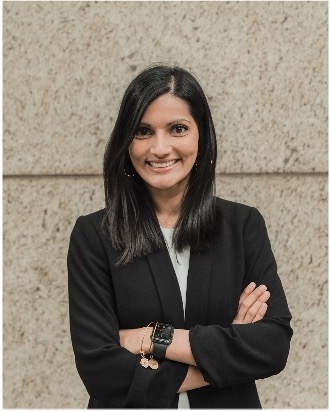
Dr. Archana M. Tedone is an Assistant Professor of Management in the Dolan School of Business at Fairfield University, where she teaches courses on leadership. Her research examines how leadership, communication, and workplace environments influence workplace safety, employee well-being, and employee voice, with a particular focus on high-stakes contexts such as healthcare and evolving work arrangements like virtual and hybrid teams. In addition to her academic work, Archana consults with organizations to strengthen their leadership and talent management practices. She is passionate about helping organizations build healthier, safer, and more sustainable workplace cultures.
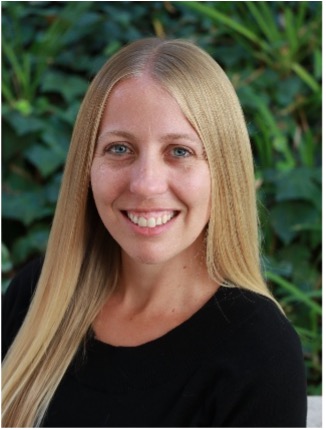
Dr. Lacie Barber is a Professor in the Department of Psychology at San Diego State University and a Society for Industrial-Organizational Psychology Fellow. She is also the Associate Graduate Advisor for the Master’s in Applied Psychology Program (with Industrial-Organizational Psychology and Quantitative Methods specializations). She is also the Director of the ConnectWell@Work Laboratory, which explores worker motivation, stress, and well-being issues among teleworkers and other workers who use electronic work (e-work) communications as part of their jobs. She also provides telework assessment and training to organizations to help leaders improve worker well-being and productivity.