
Blog post by Rachel Perpich
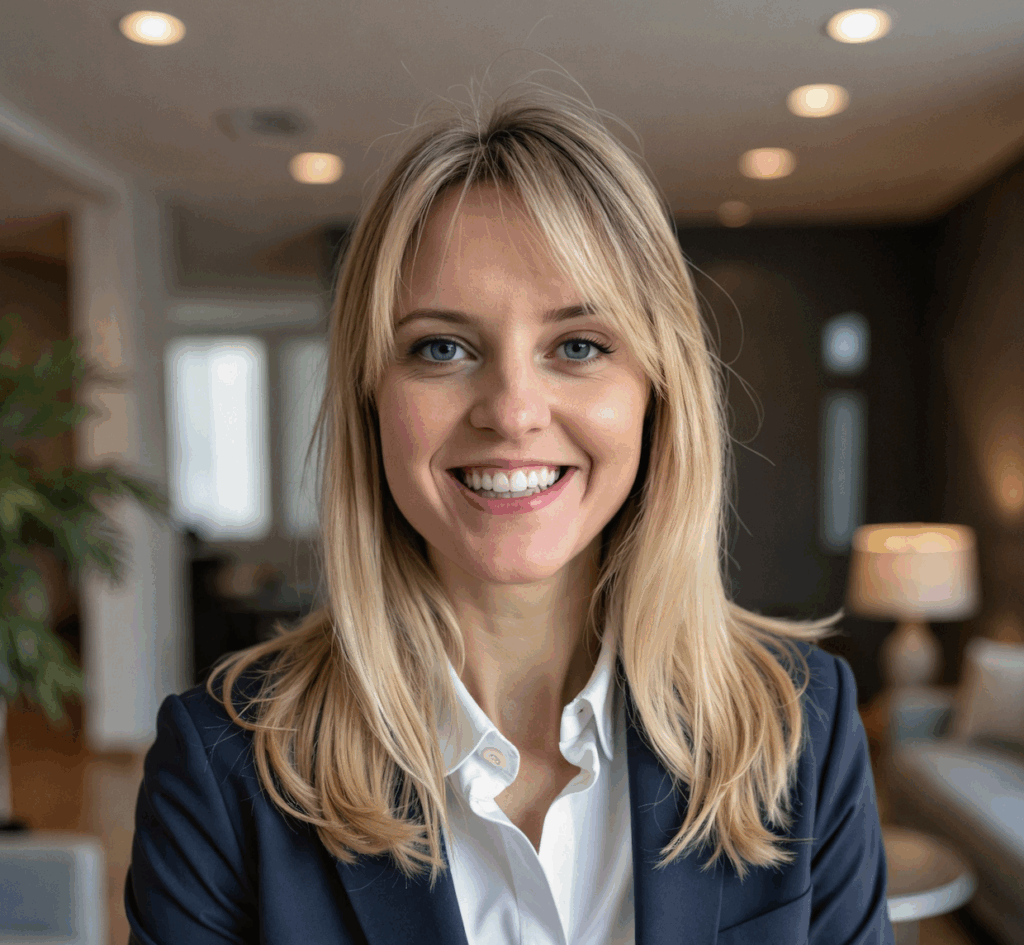
In September of 2024, SOHP’s Scientific Affairs and Practitioner Committees co-hosted a SOHP Member Spotlight Event featuring Dr. Stephanie Andel. The event was co-hosted by Dr. Rebecca Brossoit and Dr. Madison Hanscom. This blog summarizes highlights from the event.
Event Introduction
The SOHP Member Spotlight event included a Q&A session with Dr. Stephanie Andel to provide insight into her career and experiences in the OHP field. Dr. Stephanie Andel leads the Employee Listening Practice at Dell Technologies. In her role, she is responsible for designing and executing Dell’s comprehensive listening strategy, including automated life cycle surveys, pulse checks, and Dell’s annual engagement survey that reaches over 120,000 team members. Dr. Andel’s career has spanned both academic and practitioner domains, previously serving as an Assistant Professor of Psychology at Indiana University-Purdue University Indianapolis. Her research has been published in top journals and featured in several national and international outlets.
Discussion Highlights
The transcript excerpts from Stephanie’s responses below have been lightly edited for brevity or interpretation.
On the role overview…
- Managing the listening strategy – The goal of the Listening Practice Team is to capture the feedback from team members and translate those findings into actionable insights to enhance the experience for our biggest asset, our people!
On the typical day in a Listening Practice Lead role…
- Thinking strategically and collaborating with internal teams – A typical day includes planning strategies for the specific surveys we are considering building out. There are lots of meetings with internal teams (e.g., Benefits, DEI, etc.) to understand questions that we can build surveys around to provide actionable recommendations. Additionally, we spend time reviewing research and connecting with colleagues in HR analytics (part of Listening Core Team) to identify the best ways to cascade findings to stakeholders.
On the skills that are important to success in your role…
- Survey development and strategic thinking – Thinking not only about the actual development of the survey, but also about how we can design surveys that are truly actionable. It’s so easy to build interesting surveys, but it’s important to not take time of team members without purpose. It’s critical to be strategic at the item level by considering what information can be learned to create recommendations from each specific item.
- Communication and meeting people where they are – Developing business acumen and understanding what the business truly cares about allows us to tie surveys to the overall strategy, helping us to articulate results in a way that resonates with every audience.
- Negotiating and influencing – I needed to learn to do this, and I’m continuing to learn. People care about surveys and the questions that are asked, but a large part of the impact is serving as a subject matter expert in conversations to guide the development of these projects to ensure they will benefit everyone involved.
On the rewarding aspects of the job…
- The meaningful and direct impact – Broadly, I get to wake up every day and think about how to do survey research that will be used by leadership at all levels of the company. The goal of all this work is to enhance the experience and well-being of our team members. It is very meaningful and exciting to do work that has a direct impact on a large group of people (120,000 employees!).
On the ways OHP training applies to your role…
- OHP is inherently part of everything I do – The role focuses on capturing feedback from team members with the end goal of making their work experience better, requiring an understanding of how work experiences shape employees’ health and well-being. In industry, people often think about key drivers of well-being in terms of employment benefits. While benefits are a critical component, health and well-being are complex entities impacted by both macro- and individual-level factors, requiring a more holistic approach to address them. So, when helping leaders, the OHP training can be pulled on to reference the broader factors that need to be considered and explain that it’s much more than benefits.
On transitioning from academia to practice…
- Similarities – I’m still reviewing research to understand the relevant themes, current trends, and best practices in the field. Additionally, survey development and cross-functional collaboration (working across disciplines) are still main parts of my role.
- Differences
- Pace of work – Gone are the days of working on projects for months or years, as things move very quickly in my current role.
- Specific population – I’m now working with one specific population (our employees) and dealing with population-level data. Descriptive statistics are more important now than when working with random samples.
- Types of statistics – I’m typically sharing “percent favorable” statistics to report level of agreement versus higher level statistics to communicate with my audience and stakeholders appropriately.
- Type of impact – You can have an incredible impact in both types of roles, but it is a different type. Currently, it is more direct than the broader implications that can occur when publishing in journals.
More on academic and practitioner career paths…
- Consider which direction feels like the best personal fit and where you’ll get the most meaning – There are so many positives in both domains, and something special about our field is that you can have impact either way. However, the two domains don’t always talk to each other as much as we could or should. In the industry, I’m seeing the challenges more when practical implications feel like an afterthought for some papers. For either path, it’s important that we continue thinking about how to bridge the science-practice gap in communicating findings, and that will drive more meaning in everyone’s work.
On emerging workforce issues/trends that OHP professionals are positioned to help organizations address…
- New advancements in technology and AI – Many questions remain unanswered, and we don’t know how these advances are impacting people. How does this impact well-being or perceptions of job security? On the other hand, how can using AI for mindless tasks open up employees’ time to focus on more important tasks?
- Implications of different work arrangements – We are continuing to move forward since the pandemic, but we’re still seeing many people with different work arrangements. Some people are remote, but others are being pulled back into the office. How does it impact important outcomes such as engagement, sense of belonging, and meaning? How do we determine best practices to support all employees when you have a mix of work arrangements within an organization?
- Diversity, equity, and inclusion – DEI work is more critical than ever. Continue to put efforts there to create workplaces where everyone feels included and everyone can be their best self.
SOHP members can access the full session recording here. If you aren’t yet a member, please consider joining to access these recordings and other great SOHP membership benefits! Here are some other topics covered in the recording:
- Advice for students on academic vs. practitioner career paths
- Balancing the “need for speed” with scientific rigor in an applied research role
- Selling the OHP mission to lay audiences
- Advice for students applying to summer internships
- Technical skills needed for employee listening roles